
Identify Redundant Tools. Reduce EdTech Spending. Simplify Your District’s Technology Ecosystem.
School districts rely on dozens, sometimes hundreds, of digital tools to support instruction, operations, and communication. Over time, this ecosystem becomes difficult to manage. Licenses go unused, tools overlap, and data becomes fragmented across systems.
A technology stack audit helps districts regain control. By documenting what tools exist, measuring usage, and evaluating value, districts can simplify their technology environment and redirect resources toward systems that truly support students and staff.
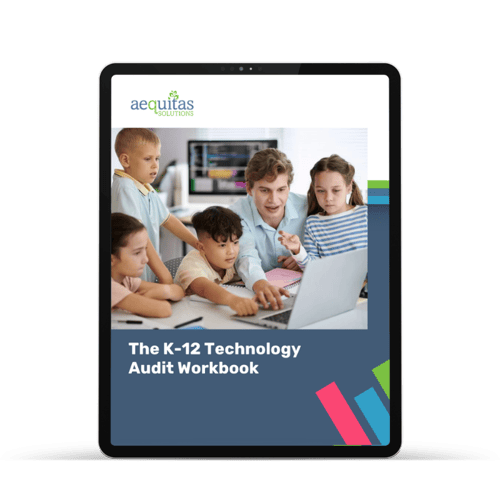
Our step-by-step workbook gives district leaders the worksheets, evaluation tools, and planning frameworks needed to uncover redundancies, reduce unnecessary spending, and build a more strategic technology ecosystem.
Download The Free Workbook
Why School Districts Need a Technology Audit
Most districts don’t intentionally create technology sprawl. Departments purchase tools independently. Free tools become permanent. Grants introduce new platforms that remain long after the funding expires.
The result is an environment where:
- Multiple tools perform the same function
- Staff spend time switching between disconnected systems
- Licensing costs increase year after year
- Data becomes siloed across platforms
Without a clear inventory and evaluation process, districts often continue paying for tools that deliver little value.

What You’ll Learn in This Workbook
The Technology Audit Workbook walks districts through a complete audit process, from preparation to executive reporting.
- Audit preparation checklist
- Technology inventory worksheet
- Utilization and cost analysis
- Redundancy evaluation framework
- Consolidation decision planner
- Technology governance framework
- Executive summary template